

The World’s Oldest Cities And What They Look Like Today

We’re used to thinking about ancient cities as something that ended. Like civilizations that collapsed and left behind ruins that we study. But some ancient cities just… didn’t end. They kept going.
People kept living there through every century, adapting, rebuilding, adding layers while keeping the old foundations. Streets designed millennia ago still guide modern commutes. Ancient architecture shares space with grocery stores and traffic jams.
These cool photos show what life looks like today in cities that have been continuously inhabited for thousands of years. History isn’t a museum exhibit here… it’s the infrastructure people use to get to work.
1. Athens (Greece)
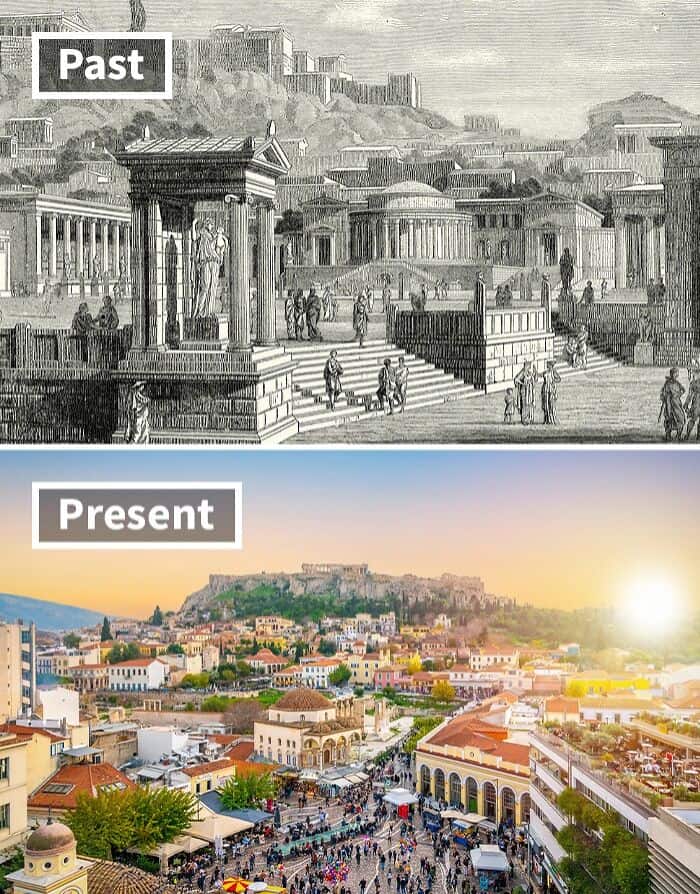
“Athens is the rare city where the skyline doubles as a history lesson. The Acropolis is not tucked away behind ropes or glass. It rises right out of the middle of everything, casually overlooking traffic, apartment buildings, and late night food spots.
People have lived here for thousands of years, long enough for ideas like democracy and philosophy to go from radical experiments to chapters in textbooks. What makes it different is that the ancient pieces were never cleared out. The city kept building around them.
Today, commuters pass ruins on their way to work. Markets fill the same neighborhoods that once echoed with public debates. The Parthenon is still up there, not as a relic, but as part of the view.
Athens does not separate old from new. It stacks them and keeps moving.”
2. Plovdiv, Bulgaria
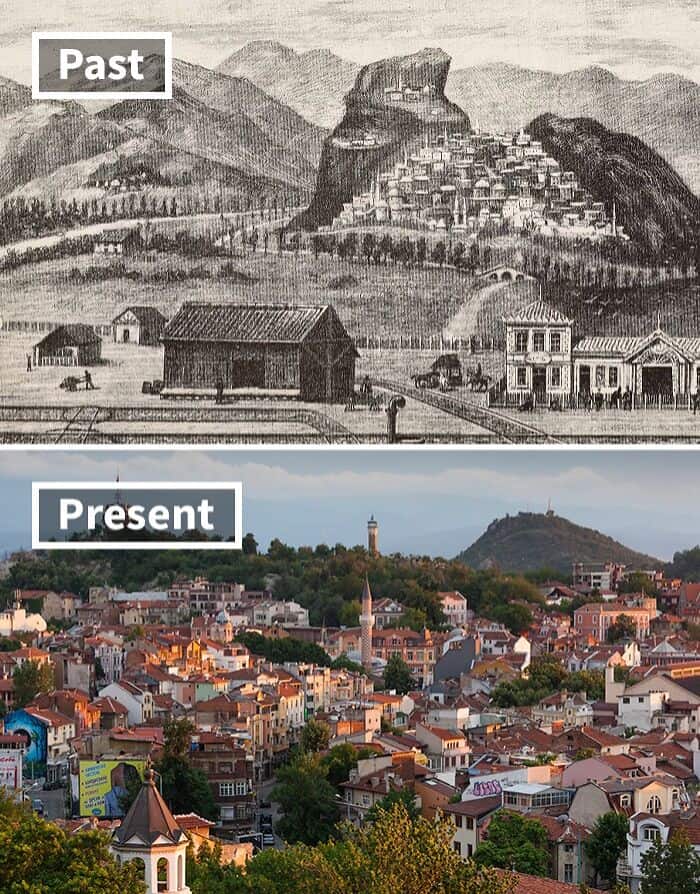
“At first glance, it feels like a classic ‘before and after’ shot. The same rocky hill, just upgraded from stone clusters to terracotta roofs and traffic.
Plovdiv has been continuously inhabited for over 6,000 years. While most cities brag about being founded in the 1800s, this one was already hosting markets when wool was high-tech. Empires rolled through, borders shifted, religions changed, and people just kept living here.
Now Roman ruins sit steps from cafés, and an ancient theater still hosts performances. It is not frozen in time. It is simply a city that never clocked out.”
3. Faiyum, Egypt

Faiyum has always depended on water in the middle of the desert. In older paintings, you see palms, a quiet bridge, and life gathered along the edge of the Nile’s reach. The setting feels remote, but it has supported communities for thousands of years.
Known in ancient times as Crocodilopolis, the city thrived because of its connection to the Nile and the fertile basin it feeds. Agriculture made it sustainable, and that steady relationship with water kept people rooted here long before modern borders existed.
Today, the landscape is more built up, with low brick homes and streets stretching toward the desert horizon. The oasis still defines it. Fields, canals, and palm groves continue to shape daily routines.
Faiyum is not dramatic in the way some ancient cities are. Its story is quieter. It endured because it could sustain life, and it still does.”
4. Jericho, Palestine

“Jericho has a claim that feels almost unreal. It is often described as one of the oldest cities on Earth, with roots stretching back more than 10,000 years. In older depictions, you see simple walls and settlements set against dry hills, an oasis carved out of desert.
Water made it possible. The nearby springs turned this patch of land into something worth defending, trading through, and settling again and again. Ancient walls once stood here long before many of the world’s earliest civilizations fully formed.
Today the surroundings are greener and more built up, with farms, roads, and even a cable car gliding overhead toward the Mount of Temptation. The desert is still close. The oasis still defines it.
Jericho feels both ancient and surprisingly normal. People live here, work here, and raise families here, just as they have for thousands of years.”
5. Byblos, Lebanon

“Byblos feels like the kind of place that accidentally invented something important and then just kept going. This coastal city has been inhabited for over 7,000 years, long enough to trade with ancient Egyptians and help give the world its alphabet.
In the older view, you see low stone foundations and open ground near the sea. Simple structures, big history. Today, the ruins still sit by the Mediterranean, but the hills behind them are filled with homes, roads, and everyday life.
Phoenicians once shipped papyrus from here. Now visitors stroll past Crusader castles, Roman columns, and seaside cafés in the same afternoon. The layers are not hidden. They are right there in the open.
Byblos is not trying to look ancient. It just happens to be.”
6. Damascus, Syria
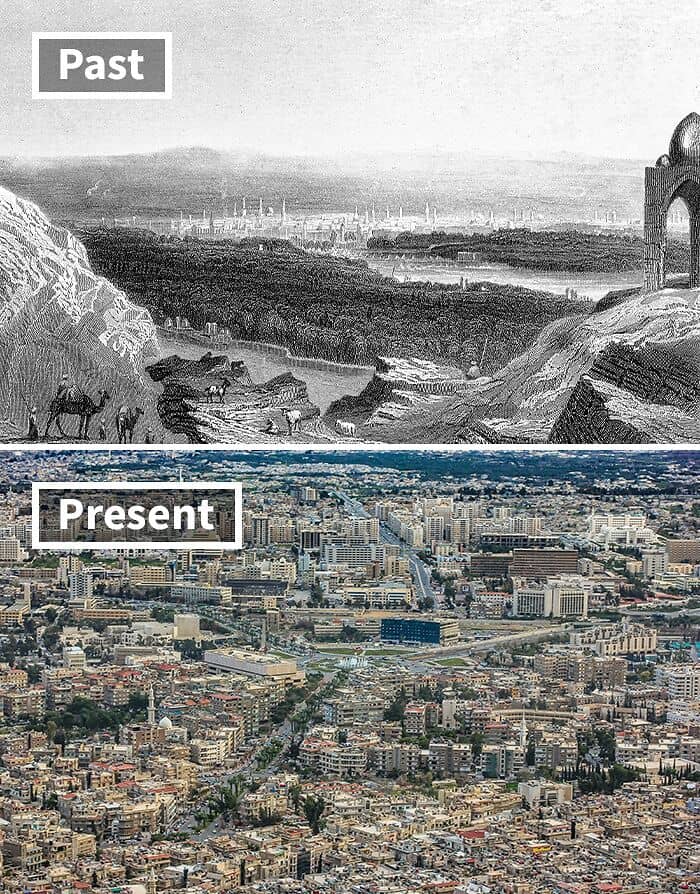
“From a distance, Damascus has always looked like an oasis. In old engravings, you see it rising from the green along the Barada River, surrounded by desert and trade routes. It was a stopover, a crossroads, a place where caravans paused and stories changed hands.
Damascus is often described as one of the oldest continuously inhabited cities in the world, with roots stretching back thousands of years. Arameans, Romans, Umayyads, Ottomans. Different rulers, same streets.
Today the skyline is denser, louder, more layered, but the layout still follows ancient lines. The old city walls remain. Markets still wind through narrow lanes. The Umayyad Mosque stands where sacred spaces have stood for centuries.
It has endured empire shifts, invasions, and modern conflict, yet people continue to live, work, and gather here. Damascus is not preserved as a relic. It is lived in, even after everything.”
7. Aleppo, Syria

“Aleppo has always looked built around its citadel. In older drawings, that fortress dominates the hill, with the city spreading outward below it. The shape of the place feels intentional, like everything grew in orbit around that stone anchor.
For thousands of years, Aleppo sat along major trade routes, linking the Mediterranean with inland empires. Merchants, travelers, and armies all passed through, leaving layers behind in markets, mosques, and caravanserais.
The modern skyline is denser and more crowded, but the outline remains familiar. The citadel still rises above the city. The old souks still wind through tight streets. Even after immense damage in recent years, restoration efforts continue and daily life persists.
Aleppo carries visible scars, yet it remains inhabited and active. It is a city shaped by history, not replaced by it.”
8. Varanasi (India)
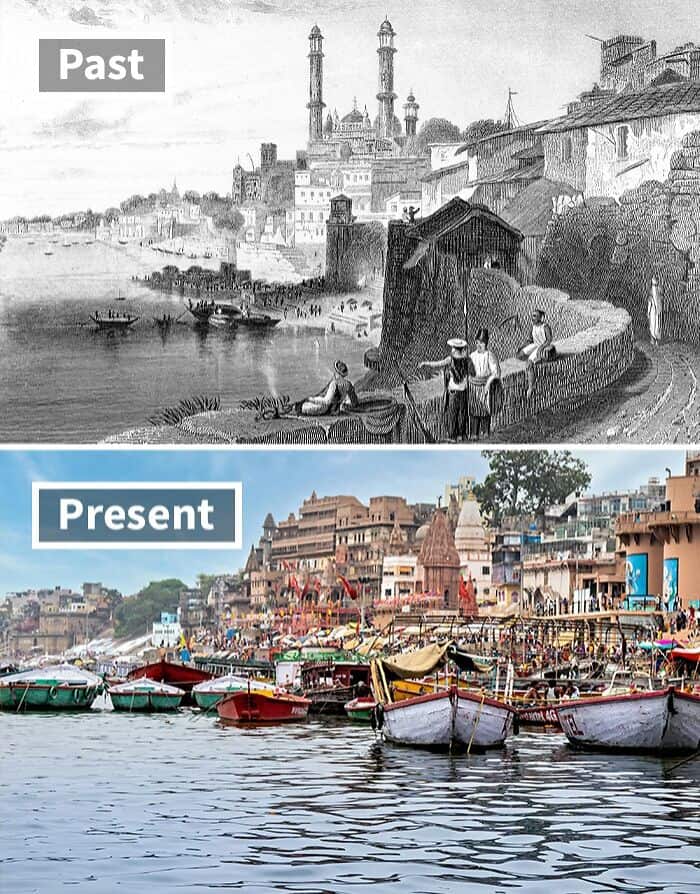
“Varanasi has always turned toward the river. In older sketches, you see stone ghats stepping down to the Ganges, with temples rising behind them. The layout feels intentional, built around ritual and water.
For more than 3,000 years, this city has been a spiritual center, drawing pilgrims who come to bathe, pray, and cremate along the riverbanks. Dynasties changed, rulers came and went, but the daily rhythm along the Ganges never really stopped.
Today the ghats are more crowded, the boats more colorful, and the skyline more layered with shrines and homes stacked together. Loudspeakers, cell phones, and electric lights now mix with chants and bells.
Varanasi is not just old. It is continuous. The same steps that held ancient ceremonies still fill at sunrise, as they have for centuries.”
9. Beirut, Lebanon

“Beirut has always faced the sea. In older photos, it looks calm and low to the ground, a coastal city stretching gently along the Mediterranean. Trade shaped it early, and waves carried influence in and out for thousands of years.
Ancient Beirut was a Phoenician port long before it became Roman Berytus, known for its law school and strategic position. The shoreline made it valuable, and that same coastline still defines the city’s rhythm.
Today the skyline rises in glass and concrete, stacked tightly against the water. High-rises crowd the coast where ships once docked with papyrus and purple dye. Despite wars, rebuilding, and political shifts, Beirut remains active and densely lived in.
It has been damaged, rebuilt, and reimagined more than once. The sea is still there, and so is the city.”
10. Jerusalem (Israel/Palestine)

“Jerusalem has never been just a backdrop. In older paintings, you see fortified walls, domes, and narrow gates set against open land. Even then, it feels like a place people argued over, prayed toward, and traveled long distances to reach.
For thousands of years, Jerusalem has been sacred to multiple faiths, layered with temples, churches, and mosques built within walking distance of each other. Kingdoms rose and fell here. Empires claimed it, lost it, and claimed it again. The stones kept standing.
Today the skyline is instantly recognizable. The Western Wall draws worshippers. The Dome of the Rock gleams above the Old City. Bells and calls to prayer still echo across the same hills described in ancient texts.
Jerusalem is not quiet history. It is active, contested, and deeply lived in. The past is not buried here. It is part of the present.”
h/t: BoredPanda