
10 Moments That Prove Choosing Kindness Is Still The Bravest Thing You Can Do

I grew up in a neighborhood where hardness was survival. You learned early: show softness, get taken advantage of.
Kindness looked like weakness, and weakness had a price. That was the only world I knew for a long time. But somewhere along the way, older, more bruised, more honest with myself, I realized something.
Aggression is easy. It’s instinct. Kindness takes everything you’ve got. It costs you something real every time. And it still, without fail, turns out to be worth it for the people you help, and quietly, for yourself.
Research confirms what experience taught me: showing compassion to others is one of the most consistent predictors of personal wellbeing ever studied.
These ten stories are proof that choosing kindness, even when it’s the harder road, is still the bravest thing a human being can do.
1. The Man At The Bus Stop

“I’d been sober for fourteen months when I ran into the guy who used to sell to me. He was leaning against the same bus shelter on Kedzie where we used to meet, looking pretty rough. We hadn’t spoken since I got clean. He owed me money, and the old me would’ve collected it, or at least made sure he knew the debt was remembered.
Instead I sat down next to him. Asked how he was doing. Listened. Then he broke down crying. Said he hadn’t eaten since the day before. I bought him a sandwich from the bodega on the corner and gave him the number of the intake counselor who had helped me get into my own program.
I still don’t know if he called, but I know I wasn’t going to be the reason he didn’t have someone to call.”
Studies on compassion at UC Berkeley’s Greater Good Science Center have consistently found that helping others activates the same reward circuits as receiving help yourself.
2. My Angel Neighbor

“OK so this one still gets me.
I’d been in the same basement apartment three years, not glamorous but it was mine, when my landlord just decided to jack the rent up $400. Which, in my city, was literally twice the legal limit.
I filed a complaint. Six months of my life, gone. Stress I didn’t have to spare. The complaint was upheld but I never saw the back rent and my landlord made the renewal process feel like punishment just for having the nerve to report him.
What I didn’t know, and didn’t find out until later, was that Carol upstairs had been keeping notes the whole time. Carol, who I had spoken to maybe four times. She had dates, amounts, conversations she’d overheard through the ceiling. She submitted all of it to the housing board to back my complaint, and she never said a single word to me about it.
I finally found out and asked her straight up why she did it. She goes: “I was in your exact situation thirty years ago and nobody helped me. I decided if I could stop it happening to someone else, I would.”
Full back rent, returned. Carol went right back to being the neighbor I wave at in the hallway.”
3. A Lifeline, And Fourteen Dollar An Hour

“I had been job hunting for eleven weeks after a layoff when I finally landed a second interview across town. My car had broken down, it was raining, and the bus route would make me twenty minutes late, which in interview terms is the same as blowing off the whole thing.
I was standing at the stop trying to figure out whether I could afford an Uber when the woman next to me, a stranger in scrubs, clearly just off a hospital shift, asked if I was okay. I explained my bad situation. She pulled out her phone, ordered me a car, and paid for it before I could finish saying “I’ll pay you back.”
She gave me her Venmo, and when I got the job I sent her the money the same day I got my first paycheck. She wrote back one line: “Knew you’d get it.””
Research on social connection from the American Psychological Association consistently shows that brief positive interactions with strangers, even small ones, have measurable effects on both mood and resilience.
4. An Apology, With Consequences

“I’ve thought about how to tell this story without sounding bitter, because I’m genuinely not anymore. But the facts are what they are.
Six years at the same firm. Three months of work on one proposal, nights, weekends, the whole thing. And in the meeting where it got presented, my manager thanked my colleague by name like it was his project. In front of everyone. I sat there and said nothing because I was still at the stage of my career where I was doing that math about what silence costs versus what speaking up costs.
Two days later the most senior partner at the firm came and sat at my desk. Said she’d gone back through the email chains, looked at the timestamps, and she knew exactly what had happened. Then she said: “I was in that room and I didn’t say anything and that was wrong.”
She went to my manager. She went to my colleague. She put it on the record. He got passed over for promotion that cycle. And she never once framed any of it as doing me a favor. She kept saying she was fixing her own mistake.
That part is what I think about. She didn’t rescue me. She just refused to let it stay wrong.”
5. My Coach Showed Up Anyway

“I was sixteen and honestly I had already mentally checked out of the season when Mr. Osei walked in.
Our real coach had a family emergency, the admin threw in a gym teacher as a substitute, and the general vibe among the team was “great, so we’re just done.” Mr. Osei knew we felt that way. He said on day one, “I’ve never coached a competitive team, I want to be straight with you about that.” And then he said, “but I know how to work hard alongside people, so that’s what we’re going to do.”
He watched film every night. Called our coach in the hospital for advice. Drove two guys home after practice three different times when their rides didn’t show, never made a thing of it. We finished 4-2. Not a miracle, but not nothing either.
At the last game my mom went up to him and told him I’d said it was the best season I ever had. He hadn’t been paid extra. Hadn’t asked for recognition. He just decided we were worth showing up for completely.”
MENTOR‘s research on youth mentorship consistently finds that consistent adult presence, just showing up reliably, is the single greatest predictor of positive outcomes for young people in hard stretches.
6. A Note On The Windshield
“I was running on fumes that day. Two years of caring for my mom through late-stage dementia and I was just empty.
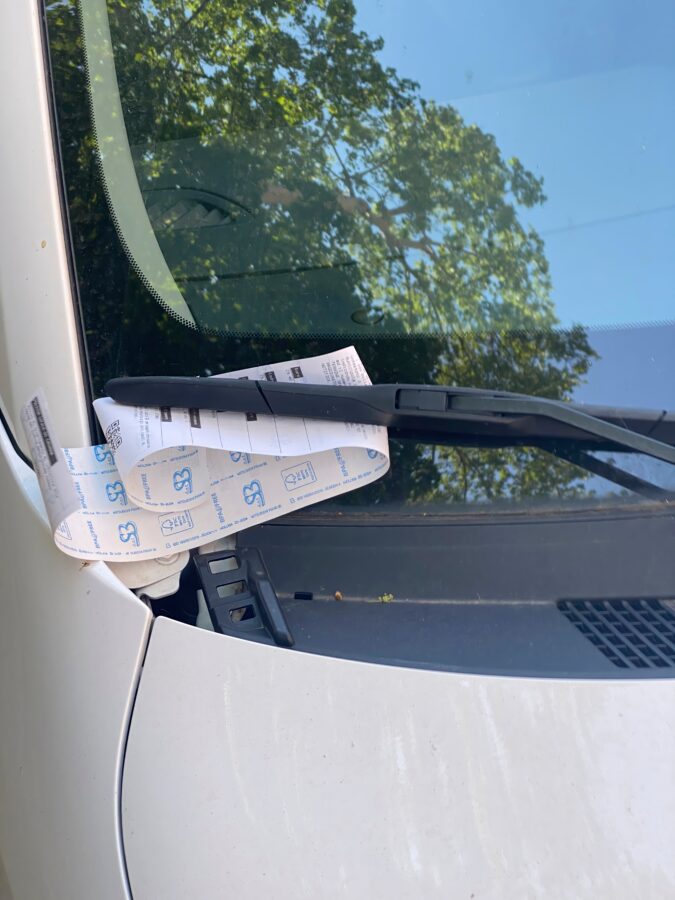
I clipped someone’s bumper in the Walgreens parking lot. Decent dent. I had $340 to my name, my mom needed her meds by 4pm, and I just stood there in the rain for a second thinking about how much more I could actually take. Then I wrote a note with my name and number, put it under their wiper, and went inside.
When I came back out there was a note on my car. A woman had seen the whole thing from inside and left it. It said she saw me write the note and that it took integrity, and that she didn’t know what I was going through but she hoped my day got easier.
The guy called me that night. Said he’d seen both notes. Said he wasn’t filing anything. Said: “You did the right thing. Let’s call it even.”
I just sat in the parking lot for a while after that call. Sometimes you’re running so low that a stranger noticing you is enough to keep you going.”
7. Three Years Of Personal Notes

“The complaint was filed by a dad who did not like that I’d told him to stop yelling at the kids from the stands. I’m almost certain that’s what it was. He claimed I was aggressive on the field. I wasn’t.
The league investigated. I resigned before it was over because I had a job and a family and I couldn’t afford the emotional cost of fighting something I knew was a lie. I assumed it would just follow me around forever.
Eight months later I got a call from the league director. The umpire who’d worked most of my games for three seasons had sent in a letter out of nowhere. Turned out he kept notes after every game he officiated, just personal records, nothing official. And three years of his notes from my games all said the same thing: calm, positive, no incidents. He submitted all of it to the investigation without being asked by anyone.
The complaint was dismissed. I’ve never had a real conversation with that man outside of a baseball diamond. Don’t even know his last name. He just decided that what he’d watched for three years meant something, and he wasn’t going to stay quiet about it.”
8. Stranger In The Waiting Room

“This is a hard one to write because I don’t really have words for what that night felt like.
My dad was in surgery. I’d been in that waiting room since seven and it was pushing eleven and I was just sitting there staring at nothing when this guy came in and sat down a couple seats away. He was shaking. Not crying but close. Staring at his phone like he was waiting for something terrible.
I didn’t say anything for a while. Then I just went to the vending machine, got a coffee, and put it on the chair between us. No big speech. He looked at me and I said: “You don’t have to talk. I just didn’t want you to have nothing.”
We sat there together for almost two hours, barely speaking. When they called his name he got up and said: “I don’t know you but tonight I needed someone to just be there, and you were.”
I think about that a lot. Not the big gestures. Just being there.”
Research on social support in medical settings actually shows that even passive companionship lowers cortisol and reduces perceived pain. But I didn’t know that then. I just knew I didn’t want him to be alone.
9. Found In The Accounts

“My brother told my mother I stole from her. I didn’t. He did.
Small amounts, over a long time, until it added up to something real. And he needed a name to point to before she started asking questions, so he picked mine. My mom believed him completely. Four years I was treated like a criminal at every family thing while he sat there passing the bread.
I stopped trying to defend myself after year one. Nobody was hearing it and it was just costing me pieces of myself every time I tried. I moved on.
What I found out later, much later, was that my mom’s accountant had known the truth almost from the beginning. She’d kept records of everything. When my mom eventually came to her confused about some numbers, she just laid it all out. No drama, no editorializing. Dates, amounts, facts.
She never once called me. Never made herself part of the story. She just held onto the truth until my mother was ready to see it.
My mom mentioned it almost in passing two years after we’d rebuilt things. Like it was a small detail. It wasn’t a small detail. It was everything.”
10. Neighbor Never Said A Word
“I don’t talk about this much but here it is.
My business partner cleaned out our joint account three days before I was supposed to buy him out and take full ownership of what we’d spent twelve years building together. Left me with the lease, the staff, the debt, and nothing to cover any of it. I had to shut down within six weeks. I was so embarrassed by all of it that I barely told anyone. Just quietly started over.
About a year later Gerald knocked on my door. My neighbor. Retired, quiet, the kind of guy you wave at but don’t really know. He said he’d run into my former partner at a business association dinner eight months back and heard him bragging about the whole thing.
And then Gerald told me he’d spent those eight months filing detailed reports with every regulatory body he could find that had any jurisdiction over what had been done. “I don’t know if anything comes of it,” he said. “I just wrote down what I heard and made sure the right people had it.”
Three months after that, my former partner’s new business was under formal investigation. Gerald never brought it up again.
He didn’t do it for credit. He didn’t even really know me. He just heard about something wrong being done to someone and decided that was enough of a reason. That’s it. That’s the whole story.”
There’s a concept called the bystander effect, the well-documented human tendency to assume someone else will step in. Gerald didn’t wait for someone else. Research is clear that it only takes one person to break that pattern. Gerald was that person. And it changed everything.