
A Non-Soccer Fan’s Guide To Enjoying The World Cup


So it’s happening again. Every four years, roughly half the planet loses its mind over a sport you’ve spent your whole life politely ignoring, and suddenly your group chat is full of flag emojis and the phrase “did you SEE that.” Your friends have opinions about a Spanish midfielder. Your barista is wearing a jersey. Someone you respect just cried.
The good news: you don’t have to actually like soccer to have a great time at a World Cup. You just need a little context, a few opinions you can borrow, and the wisdom to keep certain questions to yourself. Here’s everything you need to fake it convincingly — and maybe, against your will, start to enjoy it.
The Rules, As Briefly As Humanly Possible
Two teams of eleven try to kick a ball into the other team’s net. Whoever does that more wins. That’s it. That’s the sport. Everything else is decoration.
A few things worth knowing so you’re not completely lost:
A match is 90 minutes, split into two 45-minute halves, with no timeouts, no commercial breaks mid-play, and a clock that counts up and never stops. When you see the referee hold up a board reading “+6” near the end, that’s stoppage time — extra minutes tacked on to make up for all the time players spent lying on the grass (more on that later).
The big confusing one is offside. Here’s the only explanation you need: you can’t just hang out near the other team’s goal waiting for a pass. At the moment a teammate kicks the ball to you, you must have at least two opponents between you and the goal line. If you don’t, the whistle blows and everyone groans. You will not understand offside in real time. Nobody fully does. Just nod.
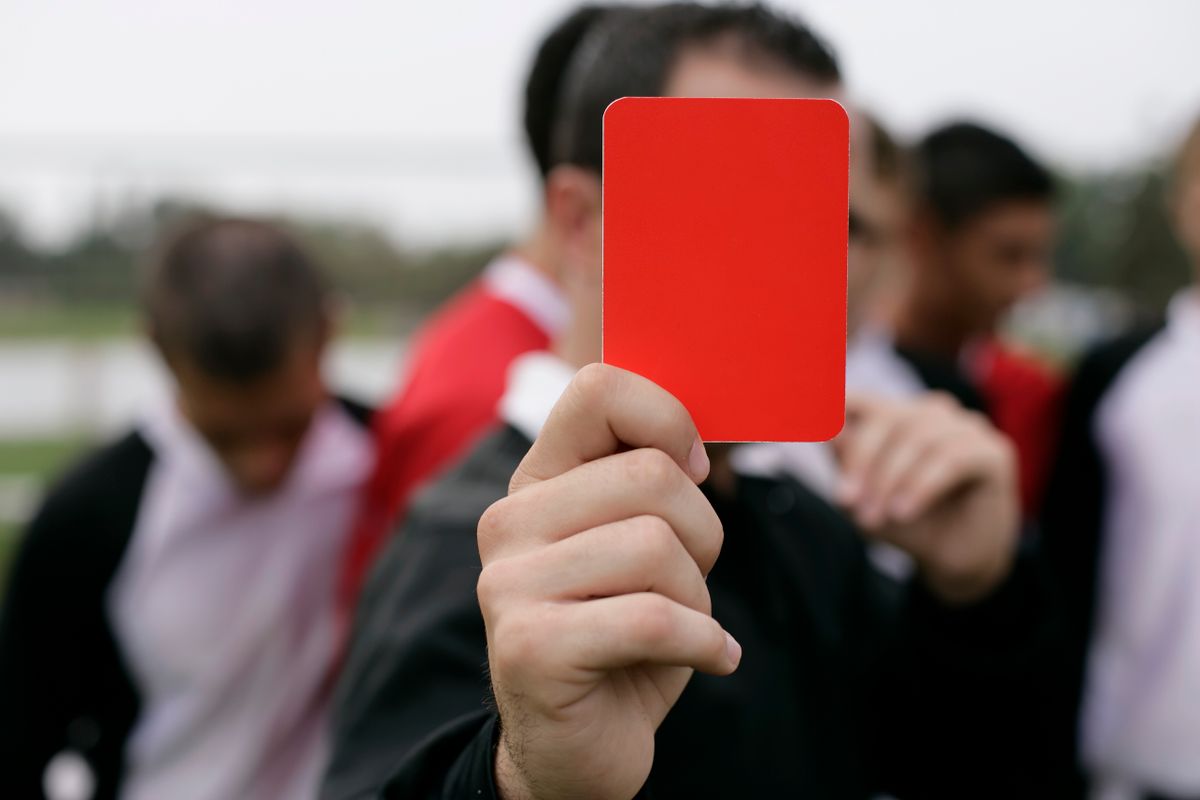
Yellow card means “knock it off.” Red card means “you’re done, leave the field,” and now that team has to play with ten people, which is a genuine catastrophe. And a penalty kick is a free shot from twelve yards out with only the goalkeeper to beat — the single most stressful moment in sports, capable of turning grown adults into puddles.
Scores are low. A 1–0 game is normal. A 3–0 game is a thrashing. If you see 4–4, you have witnessed a miracle and should tell people about it for years.
A Very Brief History (Mostly So You Can Sound Smart)

The World Cup has been held roughly every four years since 1930, pausing only for that whole World War II situation. Brazil has won it five times, more than anyone, which is why Brazilians treat the tournament as a birthright and the rest of the world treats Brazil with suspicion.
The crucial thing to know about this one: it’s the biggest in history. The 2026 World Cup is co-hosted by the United States, Canada, and Mexico, and FIFA expanded the field to a record 48 teams packed into 12 groups — which is more soccer than any human was designed to watch. The final is at MetLife Stadium in New Jersey on July 19, which means the sport’s most glamorous moment will unfold across the river from a Bass Pro Shops. The tournament contains multitudes.
Teams to Watch (So You Can Pick One to Care About)

You will enjoy this infinitely more if you adopt a team. Here are your main characters:
- Spain — The reigning European champions and many people’s favorite to win the whole thing. They don’t really have a classic goal-scorer; instead they pass the ball roughly nine thousand times until the other team gives up out of exhaustion. Beautiful to watch, mildly hypnotic.
- France — Absurdly deep in talent, to the point where the players they leave at home would be the best player on most other teams. The bookies’ other top pick. Annoyingly good.
- Argentina — The defending champions, dragged to glory in 2022 by Lionel Messi, possibly the greatest player ever, now in the twilight of his career. Adopt them if you enjoy emotional storylines and watching a small genius do impossible things.
- Brazil — Five-time champions, currently flying under the radar, which somehow makes them more dangerous. The flashiest, most joyful style of play. A safe pick for the aesthetics alone.
- Portugal — Built around Cristiano Ronaldo, who at 41 is still chasing the one trophy that has eluded him. Pure drama, every single match. Adopt them if you like a protagonist who is also, occasionally, the villain.
- England — Perennially talented, perennially heartbroken, beloved for the elaborate ways they find to lose. Adopt them if you enjoy suffering.
Pick one. Loyalty can be completely arbitrary — heritage, jersey color, a player with a fun name. Nobody will check your credentials.
Things Not to Say to a Hardcore Fan

This section may save a friendship. Each of the following questions is reasonable, innocent, and will make a true fan’s eye twitch. Read them, understand them, and then never say them out loud.
“Why do they keep falling down like they’ve been shot, then pop up totally fine?” You’ve noticed the flopping. Congratulations, you have eyes. Yes — a player will go down clutching his shin as if a sniper got him, roll four times, summon the medical staff, and then sprint back into play ninety seconds later fully healed. This is called diving or simulation, and it is a dark art. The goal is to draw a foul, waste time, or get an opponent in trouble. Fans find it embarrassing and will absolutely defend their own team doing it while raging when the other team does. Do not bring this up as a “gotcha.” You will not be the first person to notice. You will simply reopen a wound.
“So it’s basically just hockey on grass, right?” No. Do not compare it to other sports. Do not call it “kickball.” Do not ask why they can’t use their hands. These are fighting words.
“Wait, nobody scored? What’s even the point?” A 0–0 draw can be a tense, gorgeous, edge-of-your-seat masterpiece, and saying nothing happened is like calling a great novel boring because no one exploded. Sit with the tension. Pretend you get it.
“Is this the guy everyone likes?” Asked while pointing at a player. Just don’t.
And the universal golden rule: call it whatever they call it. If your friend says “football,” you say football. If they say “soccer,” you say soccer. The word is a minefield and you do not need to die on it.
You’re Ready

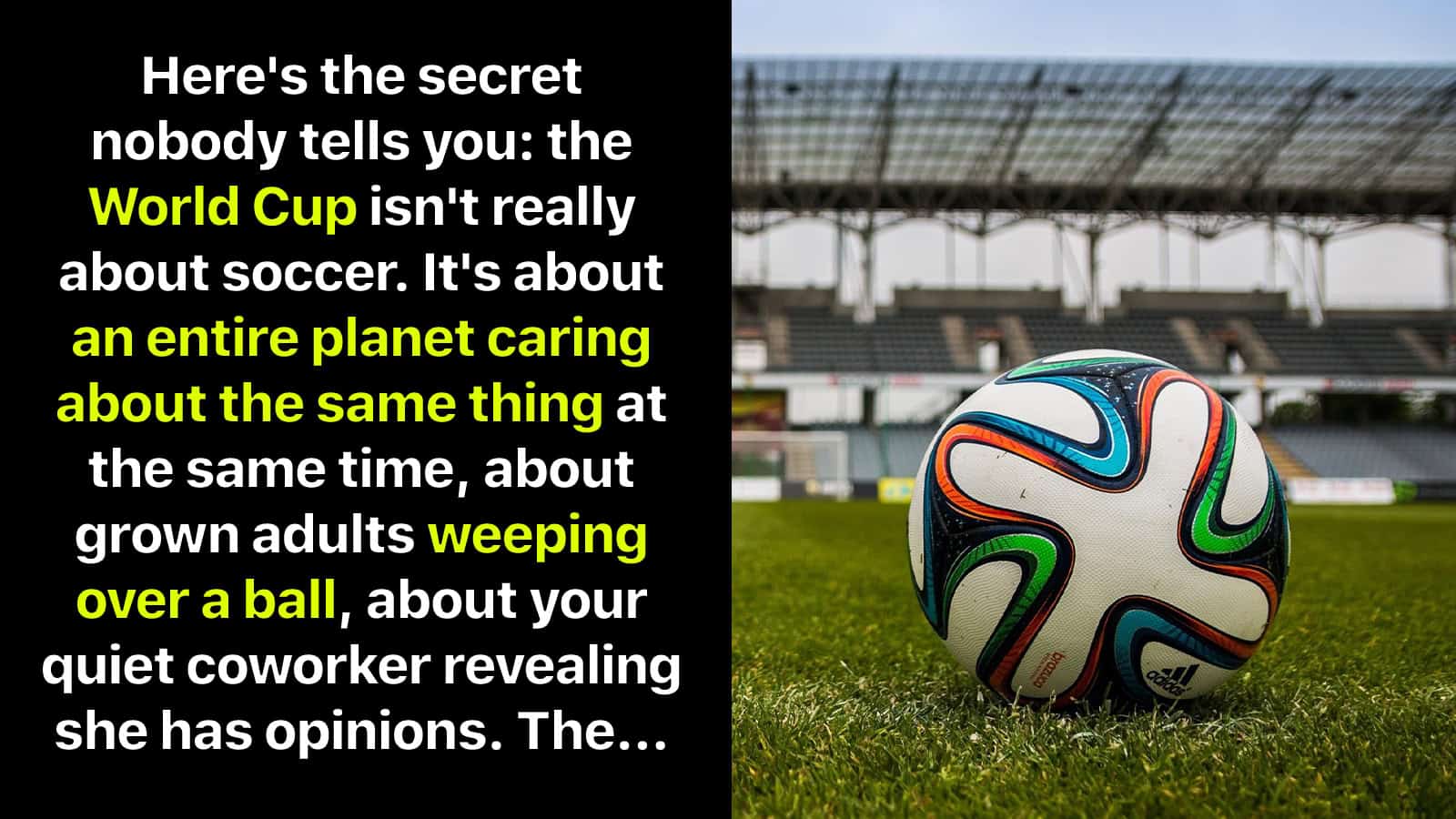
Here’s the secret nobody tells you: the World Cup isn’t really about soccer. It’s about an entire planet caring about the same thing at the same time, about grown adults weeping over a ball, about your quiet coworker revealing she has opinions. The sport is just the excuse.
So grab a jersey you have no business wearing, pick a team for reasons you can’t justify, learn one player’s name, and when everyone in the room leaps up screaming — leap with them. You won’t know exactly why.
That’s half the fun.