
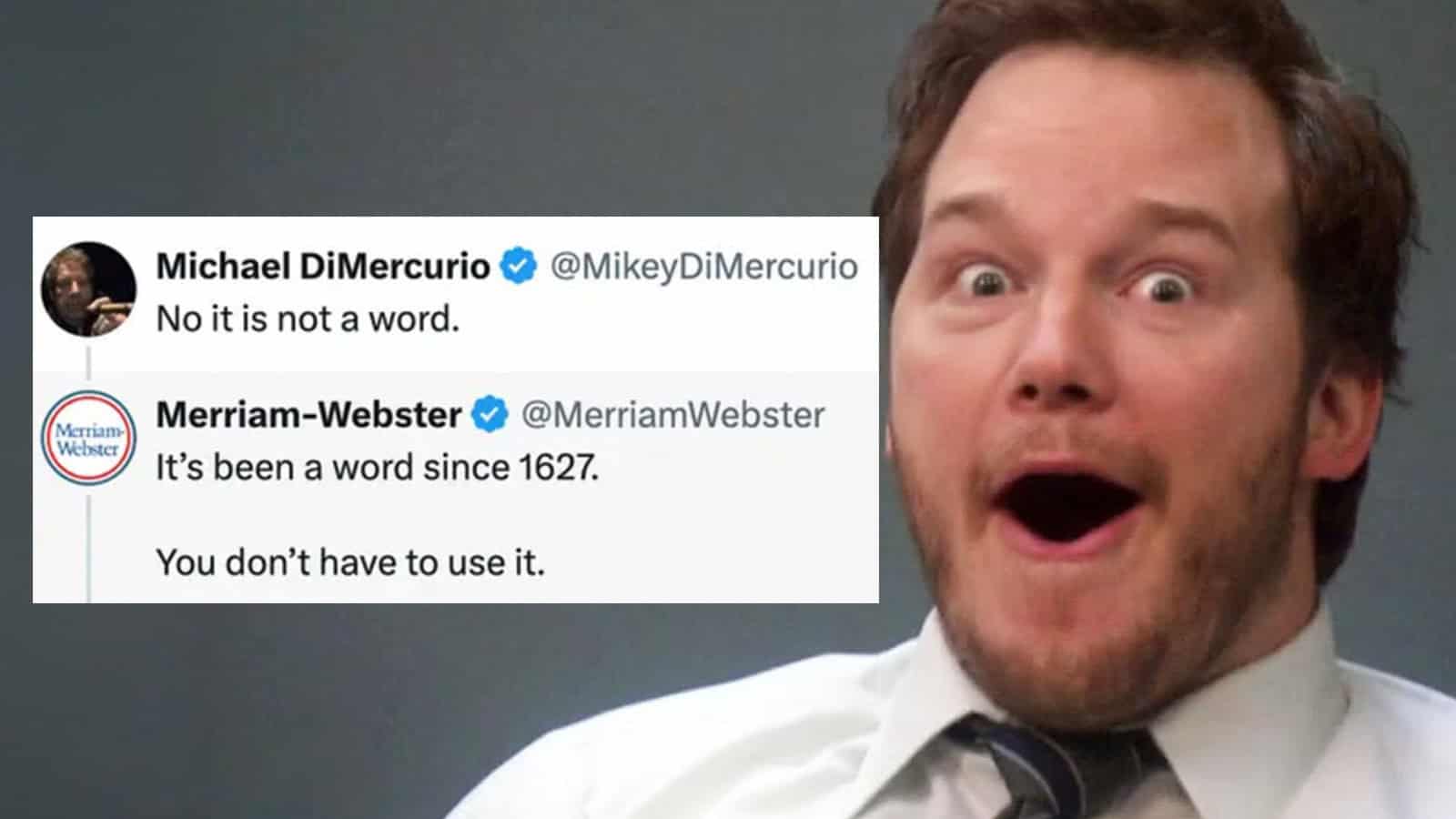
Merriam-Webster Says This “Fake” Word Is A Real Word, And People Aren’t Having It

There are certain words you hear someone say and immediately think, “That can’t be right.”
“Supposably” is one of those words.
It just sounds wrong. Like something you’ve been corrected for saying since elementary school, right alongside “irregardless” and asking if you “can” go to the bathroom instead of “may.”
Well, Merriam-Webster recently shared a little fact about “supposably” that has people rethinking everything they thought they knew about the English language.
Merriam-Webster Just Dropped A Grammar Bomb On Everyone
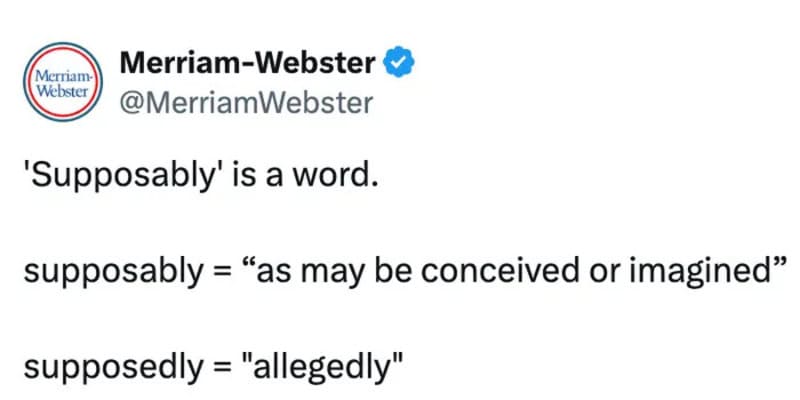
For years, “supposably” has been one of those words that immediately makes someone want to correct you. You say “supposably,” and somewhere within a 20-foot radius, a person who got an A in English class sits up a little straighter.
Well, Merriam-Webster just ruined their day.
Apparently, “Supposably” Has Been A Word Since 1627
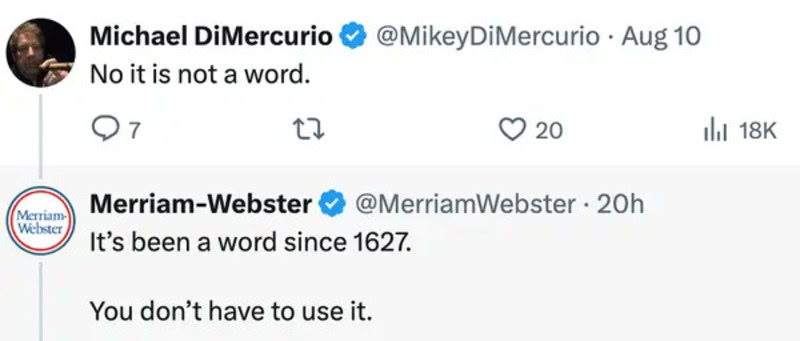
The dictionary casually reminded everyone that “supposably” is, in fact, a real word. And apparently this isn’t something they quietly added last Tuesday while nobody was looking.
Merriam-Webster says it’s been a word since 1627.
Naturally, people took this information very well.

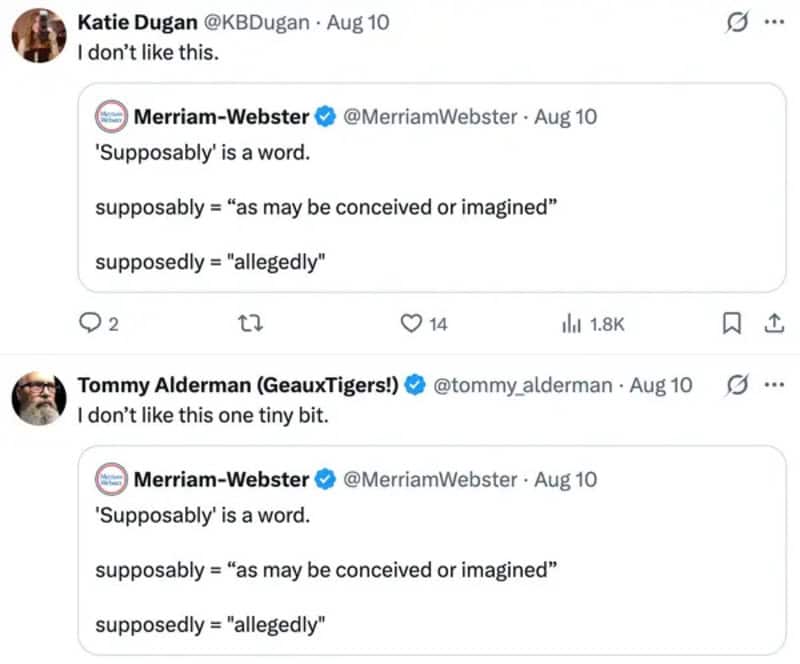
People Were Not Ready To Accept This Information
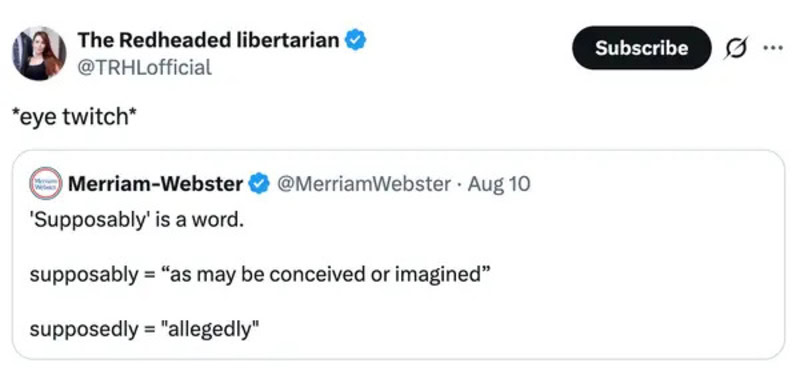
The funniest part is watching people argue with the literal dictionary about whether a word exists. Merriam-Webster basically responded, “Okay, don’t use it then.”
5.
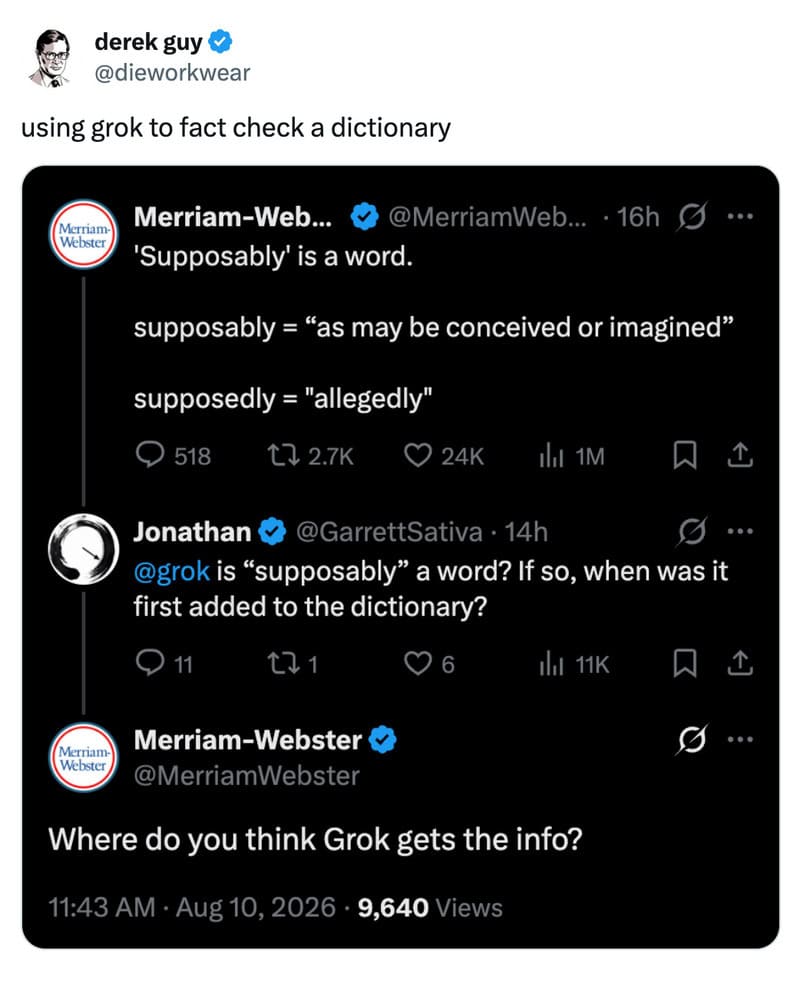
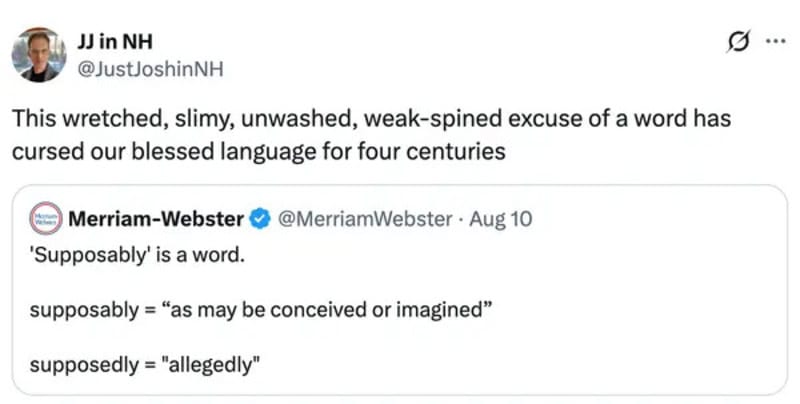
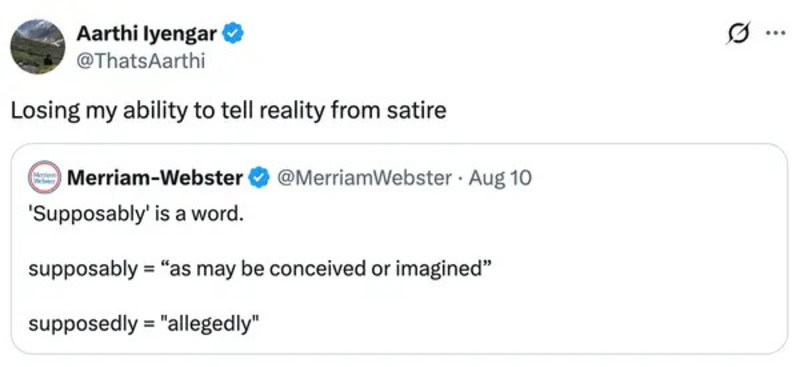
We’ve Officially Reached The Betrayal Stage
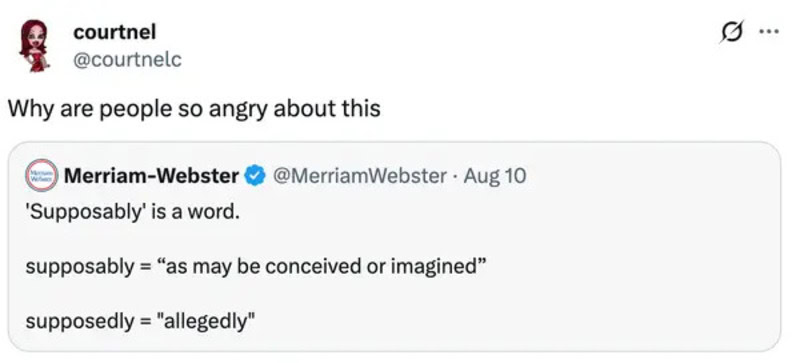
At this point, we’ve moved beyond grammar and into betrayal. People have teachers to confront. Apologies need to be issued. Four hundred years of “supposably” slander must be addressed.
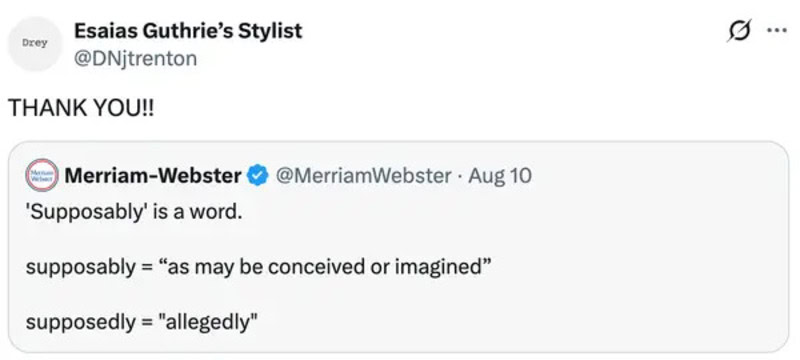
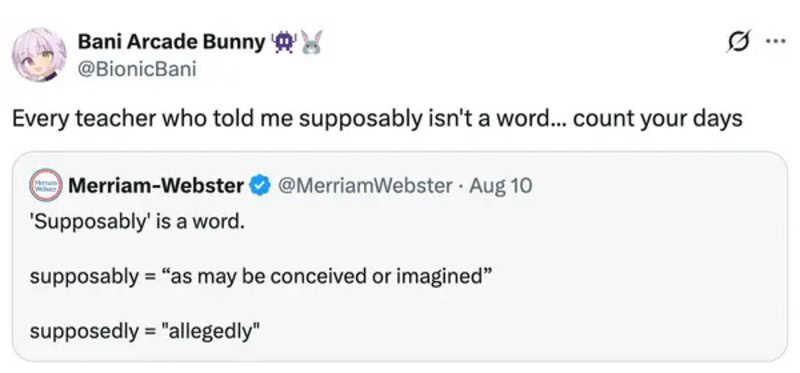
And Then Someone Remembered Joey Tribbiani
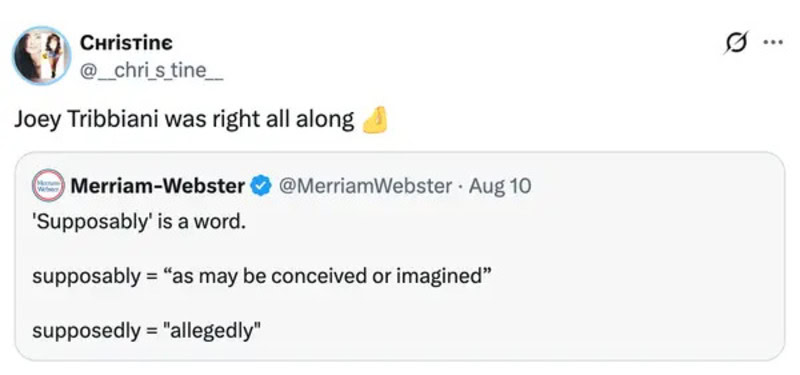
At this point, there’s really only one conclusion to draw from all of this. Somewhere, Joey Tribbiani is feeling extremely vindicated.
Joey wasn’t butchering the English language. Supposably, he was ahead of his time.